What is Spondylosis?
Spondylosis is a general term for age-related degeneration of the spine, essentially osteoarthritis of the spinal discs and joints. It most commonly involves the cervical (neck) and lumbar (lower back) regions. As discs lose hydration and elasticity over time, bone spurs, thickened ligaments and other degenerative changes can develop, sometimes causing pain, stiffness or nerve compression.
Types of Spondylosis
Cervical Spondylosis: Degeneration of the neck vertebrae, often causing neck stiffness and symptoms radiating into the shoulders and arms.
Thoracic Spondylosis: Degenerative changes in the mid-back, less common.
Lumbar Spondylosis: Degeneration of the lower back vertebrae, the most frequent type, often associated with low back pain and sciatica.
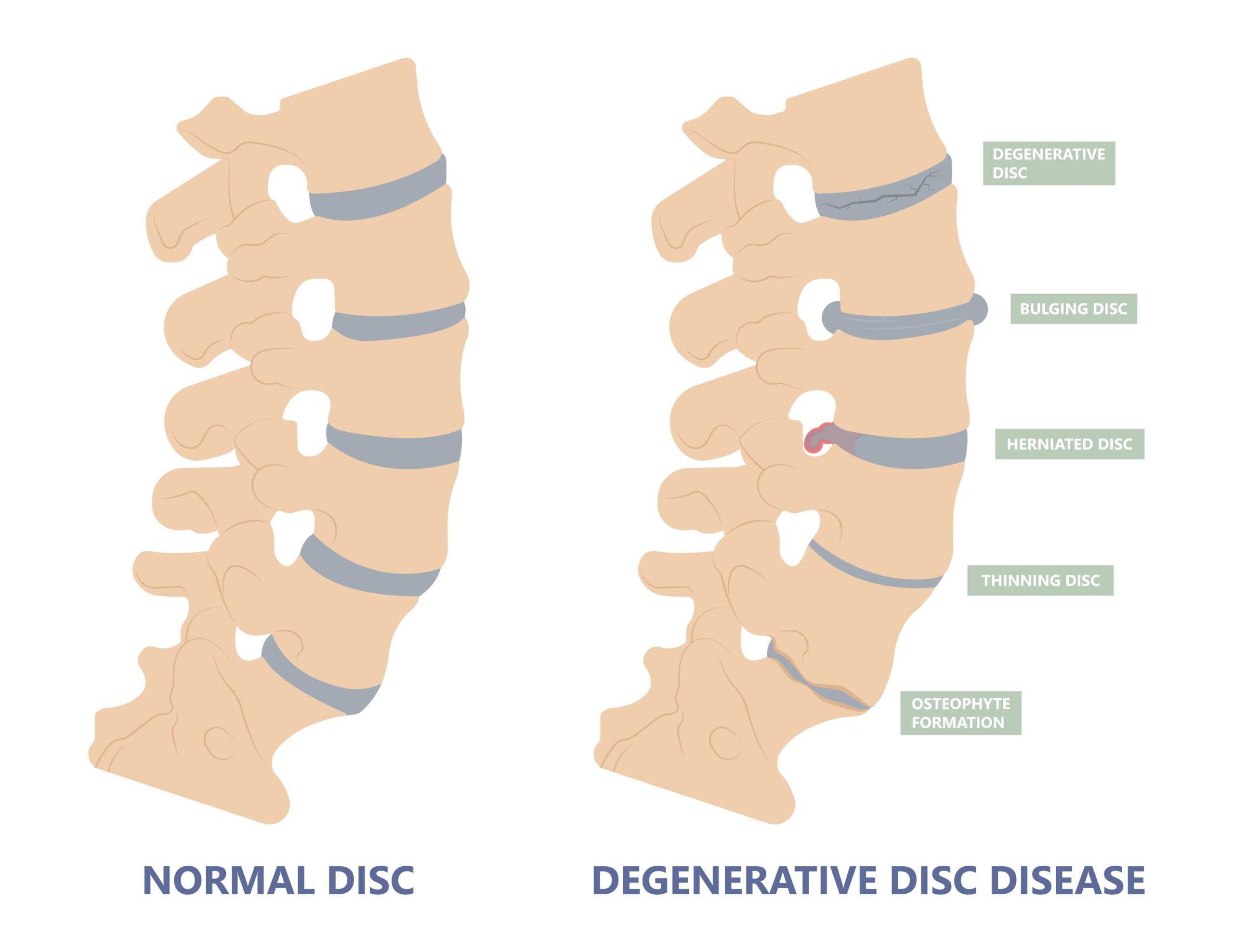
Causes
Common causes include:
– Natural aging of the spine
– Repetitive stress and overuse
– Previous spinal injuries
– Genetic predisposition
– Poor posture over many years
– Excess body weight loading the spine
Symptoms
Symptoms may include:
– Neck or back stiffness and pain
– A grinding sensation during movement
– Numbness or tingling in the arms or legs
– Muscle weakness
– Limited range of motion
– Pain that worsens with activity or prolonged positions
Diagnosis
Diagnosis begins with a physical exam and history. Imaging confirms spondylosis and evaluates nerve involvement:
– X-rays to detect bone spurs and disc space narrowing
– MRI to assess soft tissues and nerve compression
– CT scan for detailed bone imaging
– EMG and nerve conduction studies to evaluate nerve function
Managing Symptoms
Spondylosis cannot be reversed, but its symptoms can be managed very effectively. Gentle exercise and stretching, heat and cold therapy, good posture and over-the-counter anti-inflammatory medication control most flare-ups. See a doctor promptly if you experience severe pain, progressive weakness, or loss of bladder or bowel control, and talk to your doctor if symptoms are limiting your daily life.
Prevention
Staying active, strengthening the core and back muscles, maintaining good posture and an ergonomic workstation, keeping a healthy weight, avoiding tobacco and lifting with proper technique all slow the degenerative changes that lead to spondylosis.
Conservative Treatment Options
Non-surgical options include:
– Physical therapy to strengthen supporting muscles and improve mobility
– Nonsteroidal anti-inflammatory drugs (NSAIDs)
– Muscle relaxants for spasms
– Heat and cold therapy
– Epidural steroid injections for nerve inflammation
– Lifestyle modifications such as weight management and ergonomic improvements
Surgical Treatment Options
Surgery is considered when conservative treatments fail and symptoms significantly affect daily life or there is severe nerve compression. Traditional options include spinal fusion, which locks the degenerated segment and can accelerate wear at neighboring levels. At NextGen Spine Center we avoid fusion: minimally invasive decompression removes the bone spurs or thickened tissue pressing on the nerves, and discectomy removes damaged disc material, all through small openings with no implanted hardware and same-day discharge.
Frequently Asked Questions
Or contact us at any time
Spondylosis refers to degenerative changes of the spine and is considered a form of osteoarthritis of the spine.
The degenerative changes cannot be reversed, but symptoms can be managed effectively with treatment, and nerve compression can be relieved when needed.
Yes. Gentle exercise and stretching are usually recommended and help keep the spine mobile and the supporting muscles strong.
Most cases improve without surgery. Surgery is considered when conservative care fails and symptoms significantly affect daily life or a nerve is being compressed.
Our team offers expert diagnosis and comprehensive treatment plans customized to help treat you. These include truly minimally invasive procedures, designed to help our patients return to a pain-free life without fusion or implanted hardware.