What is Facet Hypertrophy?
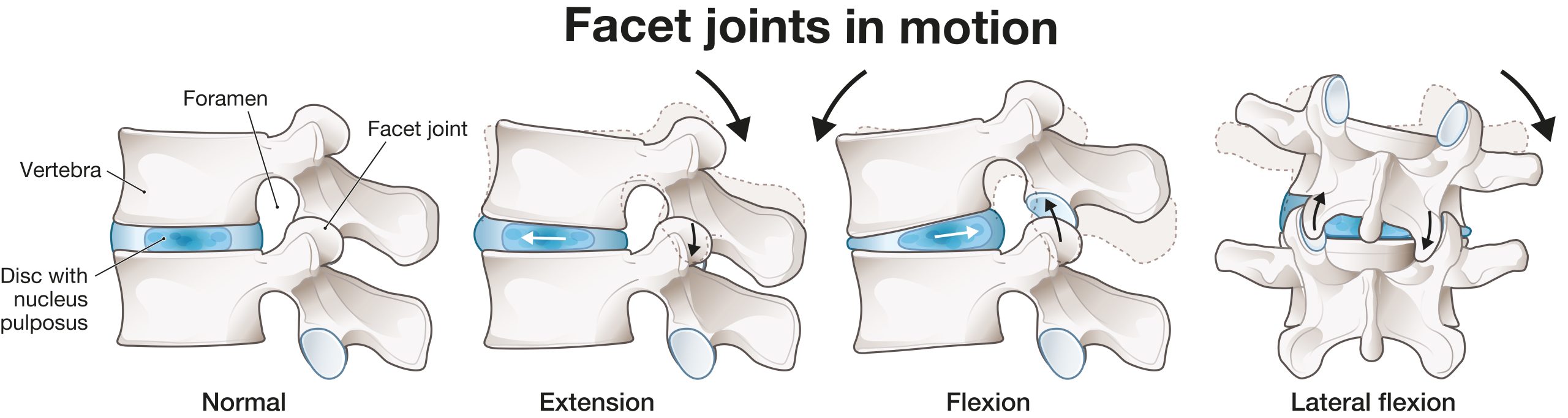
Facet hypertrophy is the abnormal enlargement of the facet joints, the small paired joints at the back of each vertebra that stabilize the spine and allow smooth bending and twisting. With long-term wear and tear, the cartilage covering the joint surfaces breaks down, bone rubs on bone and the body responds by forming extra bone (osteophytes) and thickened, inflamed joint tissue. This overgrowth can narrow the openings where spinal nerves exit (the foramina) or contribute to narrowing of the spinal canal, irritating or compressing nerves.
Types of Facet Hypertrophy
Cervical Facet Hypertrophy: Affects the neck and can cause pain radiating to the shoulders, upper back and base of the skull.
Thoracic Facet Hypertrophy: Less common, involves the mid-back.
Lumbar Facet Hypertrophy: The most frequent type, affecting the lower back with pain that may refer into the buttocks and thighs. It is a common finding on X-rays, CT and MRI in middle-aged and older adults.
Causes
Common causes include:
– Aging and natural degenerative changes (most common)
– Osteoarthritis or other forms of arthritis
– Repetitive stress, poor posture or overuse
– Previous injuries or trauma
– Associated degenerative disc disease, which shifts load onto the facet joints
Symptoms
Common symptoms include:
– Localized back or neck pain near the affected joints
– Pain that worsens with twisting, bending or arching the spine
– Stiffness after rest that improves with movement
– Tenderness over the spine
– Referred pain into the buttocks and thighs (lumbar) or the shoulders and base of the skull (cervical)
Diagnosis
Diagnosis involves:
– Detailed history and physical exam
– X-rays to identify joint degeneration
– MRI or CT scans to visualize joint enlargement and nerve compression
– Diagnostic facet joint injections to confirm the source of pain
Managing Symptoms
Facet-related pain often flares with activity and settles with rest, heat, gentle movement and over-the-counter anti-inflammatory medication. Physical therapy that strengthens the core and improves posture reduces the load on the joints. If pain persists, radiates into a limb or is accompanied by numbness or weakness, it is important to talk to your doctor so the enlarged joint and any nerve compression can be identified and treated.
Prevention
Facet hypertrophy is part of the spine’s natural aging process, but its progression can be slowed. Good posture, ergonomic workstations, regular activity, core strengthening, a healthy weight, avoiding tobacco and proper lifting technique all reduce the repetitive stress that drives joint enlargement.
Conservative Treatment Options
Non-surgical treatments may include:
– Physical therapy to improve mobility and strength
– Nonsteroidal anti-inflammatory drugs (NSAIDs)
– Postural and ergonomic modifications
– Activity modification and weight management
– Facet joint injections for temporary pain relief
– Radiofrequency ablation (RFA) to reduce pain transmission from the joint
Surgical Treatment Options
Surgery is reserved for cases that do not respond to conservative treatment. At NextGen Spine Center, minimally invasive facet joint surgery removes or ablates the enlarged, inflamed joint surfaces through a small opening, and foraminotomy or decompression relieves any nerve compression the overgrowth has caused. These procedures preserve the spine’s natural motion, require no fusion or implanted hardware, and allow patients to return home the same day.
Why We Recommend Regenaplasty
For patients whose facet hypertrophy requires surgical decompression, we often recommend Spinal Regenaplasty rather than foraminotomy or decompression alone. Removing the overgrown bone and thickened joint tissue relieves the nerve compression it caused, but it doesn’t address the underlying joint degeneration driving that overgrowth — which is why the bone and soft tissue can continue to thicken over time. Regenaplasty pairs that same minimally invasive decompression with regenerative biologics applied directly to the facet joint and surrounding tissue, targeting the degenerative process itself to support longer-lasting relief and healthier joint function. Learn more about Spinal Regenaplasty.
Frequently Asked Questions
Or contact us at any time
They are closely related. Facet hypertrophy describes the enlargement of the joint seen on imaging; facet joint syndrome describes the pain that arises from an arthritic or inflamed facet joint. Hypertrophy is one of the most common causes of facet joint syndrome.
No. It is a frequent finding on imaging in middle-aged and older adults, and many people have no symptoms at all.
The bony enlargement itself does not shrink, but the pain and inflammation it causes can be managed very effectively, and the overgrowth pressing on a nerve can be removed surgically if needed.
No. Most patients improve with physical therapy, medication and injections. Surgery is considered when pain persists despite conservative care or when the overgrowth is compressing a nerve.
Our team offers expert diagnosis and comprehensive treatment plans customized to help treat you. These include truly minimally invasive procedures, designed to help our patients return to a pain-free life without fusion or implanted hardware.