Minimally Invasive Laminectomy/Laminotomy
A minimally invasive laminectomy is a surgical procedure to relieve pressure on the spinal cord or nerves by removing part of the lamina, the bony arch of the vertebra. Unlike traditional open laminectomy, this technique uses smaller incisions and specialized tools to minimize tissue damage, reduce pain, and promote a faster recovery.
Advantages of Nextgen Spine Care’s Minimally Invasive Spine Surgery
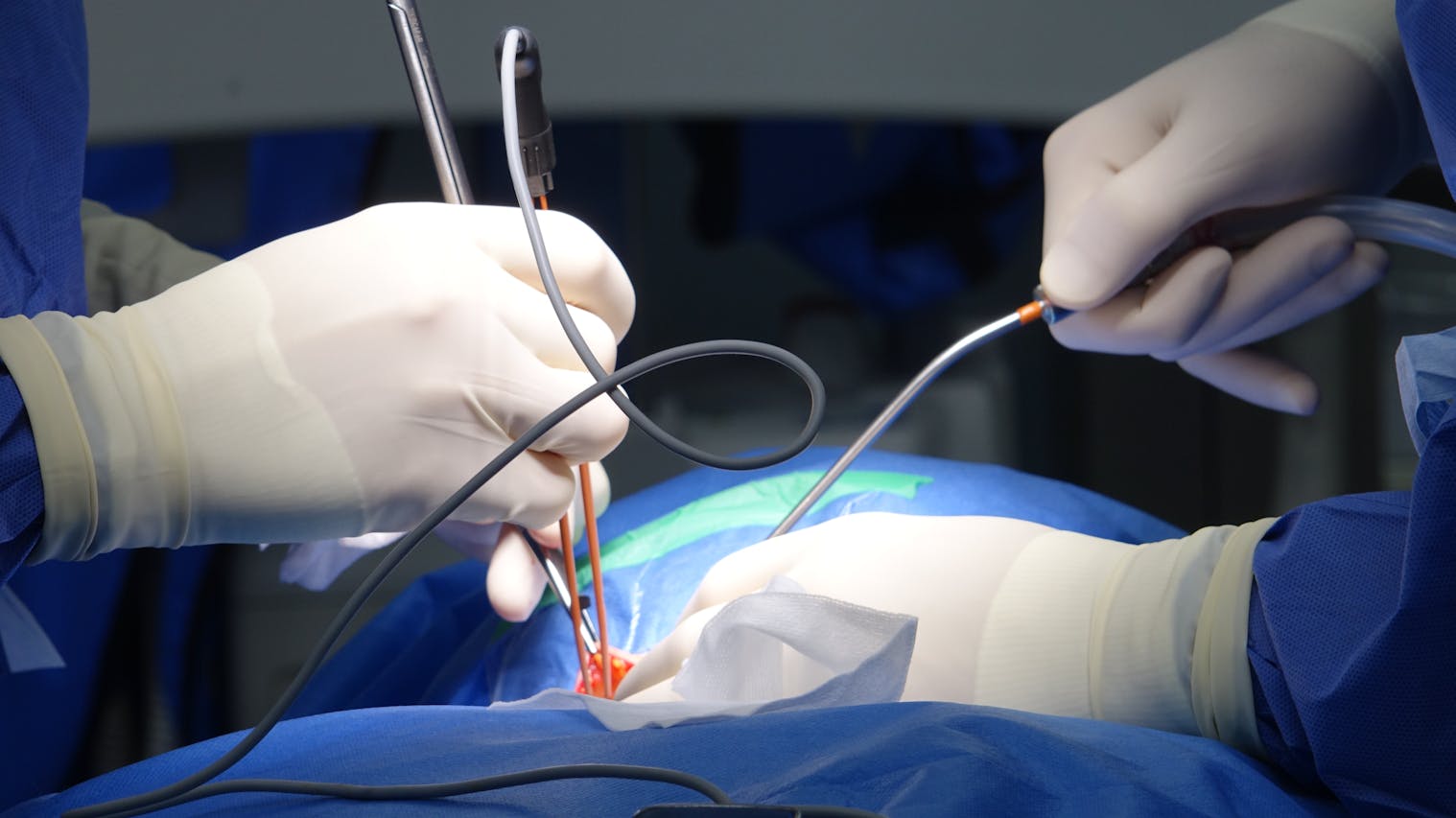
At NextGen Spine Center, we perform minimally invasive laminectomy and laminotomy procedures to relieve pressure on the spinal nerves while preserving the surrounding muscles and healthy tissue. Using small incisions and specialized instruments, we precisely remove only the bone and soft tissue responsible for the compression, minimizing unnecessary disruption to the spine’s supporting structures. This minimally invasive approach typically leads to less postoperative pain, smaller scars, and a quicker recovery compared to traditional open surgery.
Most patients undergo the procedure using conscious IV sedation rather than general anesthesia and are able to return home the same day. By limiting tissue trauma, this technique also helps reduce the risk of infection and other complications while effectively relieving nerve compression and helping patients get back to their daily activities sooner.
Explanation of the Minimally Invasive Laminectomy With NextGen
During a minimally invasive laminectomy:
- A small incision is made over the affected spinal segment.
- A tubular retractor is inserted to gently separate muscles.
- Specialized instruments are used to remove part of the lamina and any bone spurs compressing nerves.
- The nerve roots are decompressed.
- The incision is closed with a few sutures.
- Patients go home the same day.
Common Symptoms That Can Be Relieved
- Lower back or neck pain.
- Radiating leg or arm pain (sciatica or cervical radiculopathy).
- Numbness or tingling in extremities.
- Muscle weakness.
- Difficulty standing or walking due to nerve compression.