What is Spinal Stenosis?
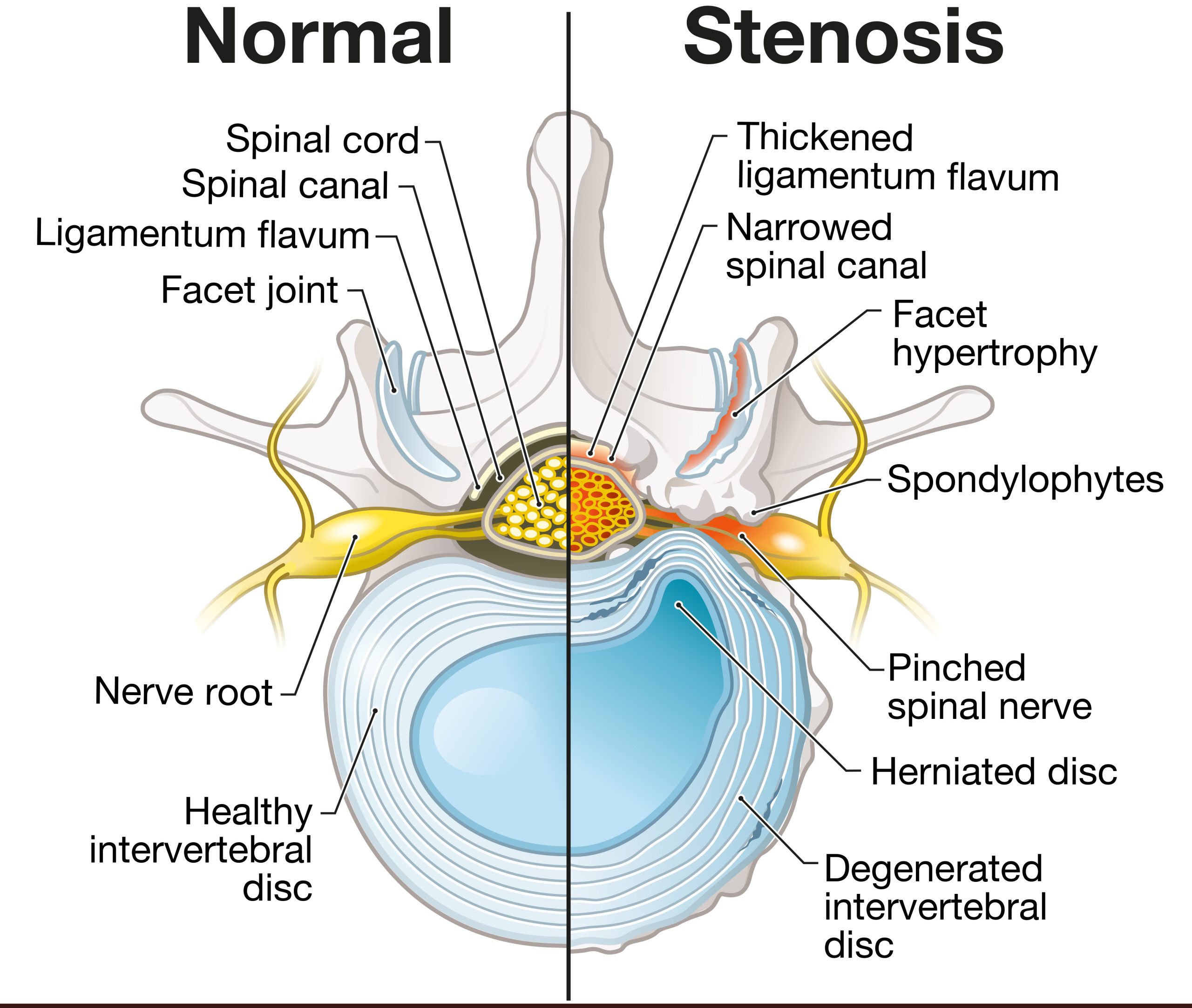
Spinal stenosis is a condition in which the spaces within the spine narrow, putting pressure on the spinal cord and nerves. It most commonly affects the cervical (neck) and lumbar (lower back) regions and is often caused by age-related changes.
Types of Spinal Stenosis
Cervical Spinal Stenosis: Narrowing in the neck region, which can affect the spinal cord and nerve roots often leading to symptoms that radiate to the shoulders, arms and/or hands.
Lumbar Spinal Stenosis: Most common type, affecting the lower back and often leading to leg symptoms such as pain, numbness, tingling or weakness along the lower extremities.
Causes
Common causes include:
– Degenerative changes due to aging
– Herniated discs
– Bone spurs (osteophytes)
– Thickened ligaments
– Spinal arthritis
Symptoms
Symptoms may include:
– Localized or radiating pain
– Numbness or tingling in arms or legs
– Muscle weakness
– Difficulty walking or maintaining balance
– Pain that worsens with certain activities
Diagnosis
Diagnosis typically involves clinical evaluation, neurological examination, and imaging
studies (MRI or CT scans) to identify the location and severity of the narrowing.
Managing Symptoms
Initial management includes rest, avoiding aggravating activities, physical therapy, and over-the-counter pain medications. Applying heat or ice and maintaining good posture may also help alleviate symptoms. While it is possible that with time and conservative treatment that these symptoms could improve and/or go away, if the symptoms worsen or can no longer be managed, it is important to talk to your doctor in order to treat spinal stenosis.
Prevention
Preventive measures include maintaining good posture, using ergonomic workstations, avoiding repetitive neck movements, staying active, and practicing neck and upper back strengthening exercises. It is also important to avoid Tobacco, maintain a healthy weight, sleep with proper neck support, and when lifting heavy objects, using proper techniques to avoid straining your neck and/or back.
Conservative Treatment Options
Non-surgical options include:
– Physical therapy
– Anti-inflammatory medications
– Epidural steroid injections
– Lifestyle and ergonomic modifications
Surgical Treatment Options
Surgery may be necessary if conservative treatments fail or if there is severe nerve compression. Decompression surgery is performed to relieve pressure on spinal nerves or the spinal cord caused by spinal stenosis. At NextGen Spine Center, we use minimally invasive techniques to achieve effective decompression with smaller incisions and faster recovery compared to traditional open surgery.
Frequently Asked Questions
Or contact us at any time
No, spinal stenosis generally refers to the narrowing of the central spinal canal, while foraminal stenosis specifically refers to narrowing at the nerve root exit points (foramina).
While some mild cases improve with conservative treatments, many cases may persist and require ongoing management.
Activities that worsen pain, such as heavy lifting, prolonged sitting or standing, and repetitive bending or twisting should generally be avoided.
No, many patients improve with conservative treatment, but surgery may be
recommended if symptoms persist or worsen despite other treatments.
Our team offers expert diagnosis and comprehensive treatment plans customized to help treat you. These include truly minimally invasive procedures, designed with helping our patients return to a pain-free life.