
What are Pinched Nerves?
A pinched nerve occurs when surrounding tissues, such as bones, cartilage, muscles, or tendons, apply excessive pressure on a nerve. This pressure disrupts the nerve’s function, leading to pain, tingling, numbness, or weakness. Pinched nerves can happen in various areas of the body, most commonly in the neck (cervical spine) and lower back (lumbar spine).
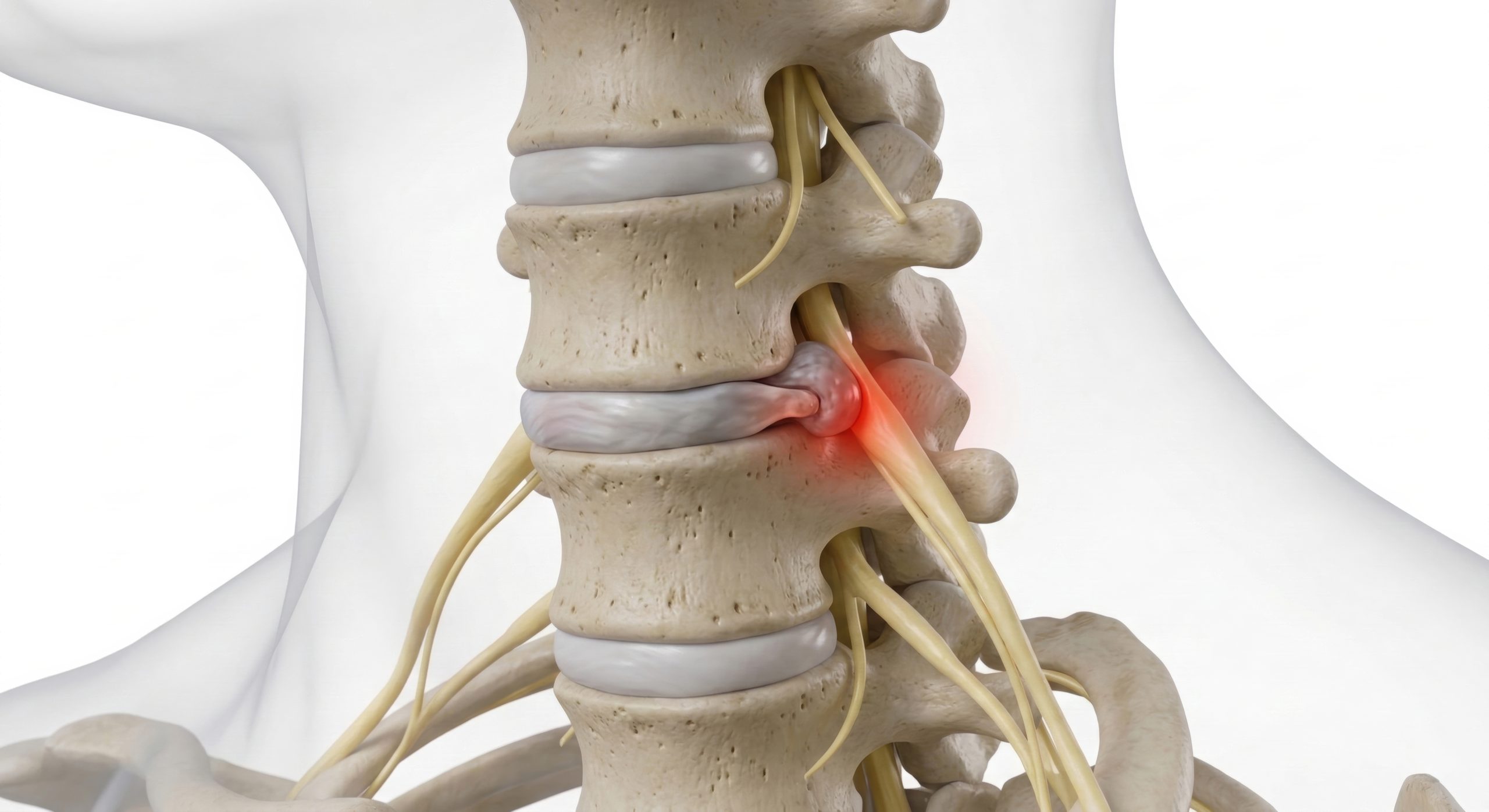
Pinched Nerves in Neck (Cervical Radiculopathy)
A pinched nerve in the neck, also known as Cervical Radiculopathy, is a serious condition that can greatly affect those who struggle with it. Caused by a mechanical issue, such as compression and/or inflammation of the nerves in the cervical spine. Those who suffer from a pinched nerve in the neck will experience pain, tingling, numbness, and/or weakness in the upper body, such as in the neck, shoulders, arms, and down the hands.
Cervical radiculopathy can be extremely painful, and make simple tasks impossible to do. Most pinched nerves improve with time or conservative treatment, however if conservative treatment failed to relieve the symptoms then surgery may be necessary.
Pinched Nerves in Lower Back (Lumbar Radiculopathy)
A pinched nerve in the lower back, known as Lumbar Radiculopathy, has the same causes and symptoms as cervical radiculopathy, except the symptoms are located in the lower back, and travel from the hips, all the way down to the feet. As the lumbar spine bares most of the body’s weight, it is more prone to conditions that pinch nerves.
Lumbar Radiculopathy can be debilitating to live with, as it makes simple task such as standing and walking difficult for many who suffer with it. Most pinched nerves improve with time or conservative treatment, however if conservative treatment failed to relieve the symptoms then surgery may be necessary.
Causes of Pinched Nerves
• Herniated Discs – Discs pressing on nearby nerves.
• Bone Spurs (Osteophytes) – Overgrowth of bone narrowing nerve pathways.
• Degenerative Disc Disease
• Spinal Stenosis
• Repetitive Movements or Overuse
• Trauma or Injury
• Obesity Increasing Pressure
• Prolonged Poor Posture
Symptoms of Pinched Nerves
• Sharp, burning pain radiating along the nerve path
• Numbness or decreased sensation
• Tingling (“pins and needles”)
• Muscle weakness
• Worsening symptoms with certain movements
• Neck or back stiffness
Diagnosis for Pinched Nerves
Diagnosis typically involves physical examination, medical history review, and imaging studies such as MRI, CT scans, and X-rays. Nerve conduction studies and EMG can also evaluate nerve and muscle function.
Conservative Treatment
• Rest and Activity Modification
• Physical Therapy – Exercises to improve flexibility, strength, and posture.
• Nonsteroidal Anti-Inflammatory Drugs (NSAIDs)
• Corticosteroid Injections
• Heat and Ice Therapy
• Bracing (e.g., neck collar or lumbar brace)
• Ergonomic Adjustments
Surgical Treatment
• Microdiscectomy – Removal of part of a herniated disc.
• Laminectomy – Removal of bone or ligament to create more space.
• Foraminotomy – Widening of the nerve passageway.
Surgical options are determined based on the underlying cause, symptom severity, and overall health.
Frequently Asked Questions
Or contact us at any time
With conservative treatment, many patients improve within 4–6 weeks. Some cases take longer, however if the symptoms are still there, then surgery may be necessary.
With conservative treatment, many patients improve within 4–6 weeks. Some cases take longer, however if the symptoms are still there, then surgery may be necessary.
Avoid aggravating movements, but gentle stretching and physical therapy are often recommended. Exercise can also help to strengthen the core muscles that reduce pressure on your spinal column therefore reducing pressure on the nerves.
If you have severe pain, weakness, or bladder/bowel dysfunction, seek prompt medical evaluation.
No—most pinched nerves improve with time or conservative treatment, however if conservative treatment failed to relieve the symptoms then surgery may be necessary.