What is Sciatica?
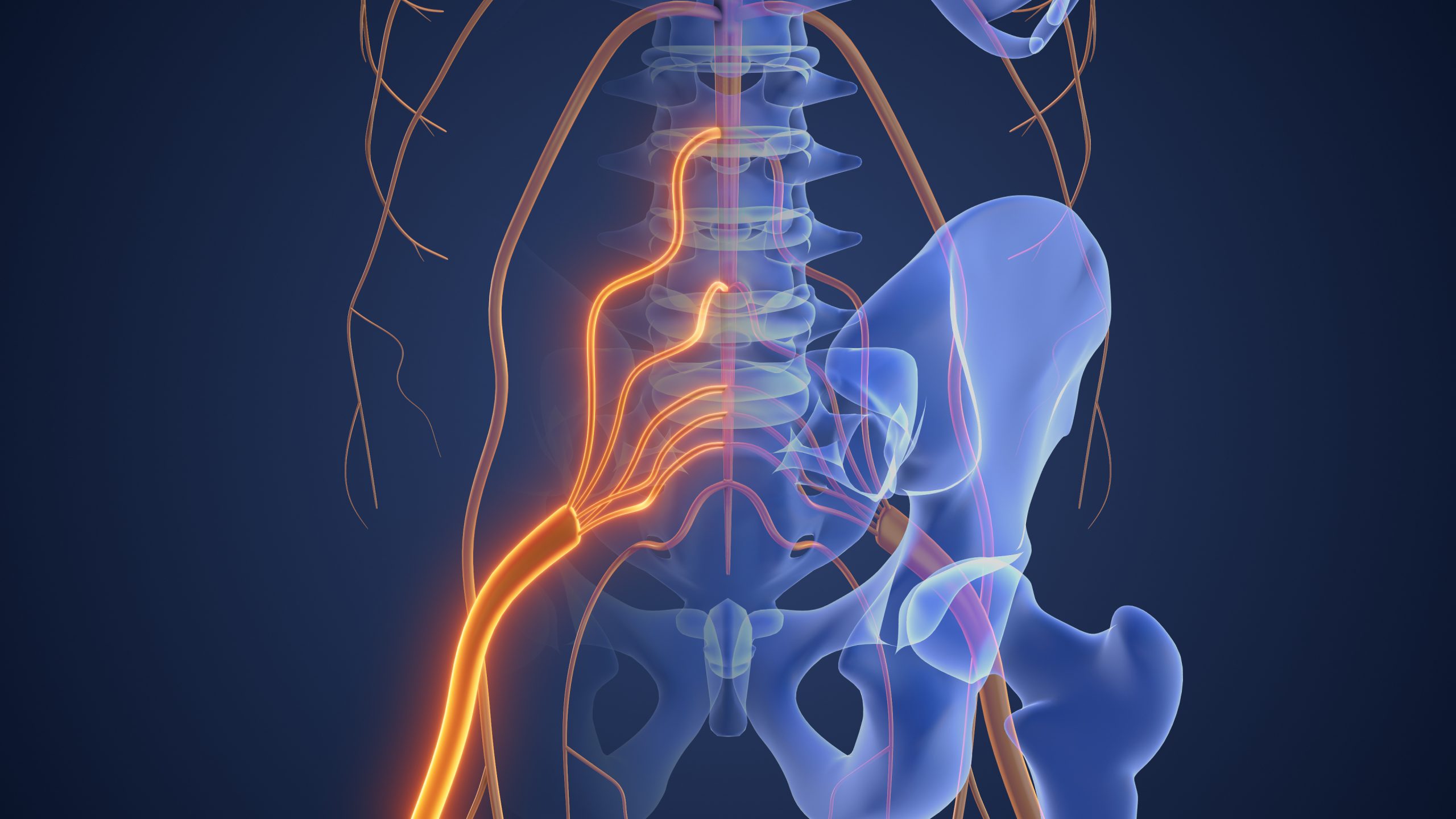
Sciatica is pain that radiates along the path of the sciatic nerve, which branches from the lower back through the hips and buttocks and down each leg. It usually affects only one side of the body. Sciatica most commonly occurs when a herniated disc or bone spur compresses part of the nerve, causing inflammation, pain and sometimes numbness or weakness in the leg.
Types of Sciatica
Acute Sciatica: A short-term episode lasting a few days to weeks.
Chronic Sciatica: Pain persisting longer than 12 weeks.
Alternating Sciatica: Pain that switches between legs.
Bilateral Sciatica: Pain affecting both legs at the same time (less common).
Causes
Common causes include:
– Herniated disc pressing on a nerve root
– Degenerative disc disease narrowing the nerve pathways
– Spinal stenosis
– Spondylolisthesis (slipped vertebra)
– Muscle spasms in the buttocks or lower back
– Trauma, prolonged sitting or poor posture
Symptoms
Symptoms may include:
– Lower back pain
– Pain radiating through the buttock and down the back of the leg
– Tingling or numbness in the leg or foot
– Muscle weakness in the affected leg
– Pain that worsens with prolonged sitting or standing
– Difficulty moving the leg or foot
Diagnosis
Diagnosis begins with a physical exam of strength and reflexes. Imaging may be ordered to confirm the cause:
– MRI for detailed images of discs and nerves
– CT scan to visualize bone structures
– X-rays to detect bone changes
– EMG to measure nerve and muscle function
Managing Symptoms
Most episodes of sciatica improve within four to six weeks with conservative care: short-term rest, heat or ice, gentle walking and targeted stretches, and over-the-counter anti-inflammatory medication. Seek medical attention promptly if you develop severe weakness, numbness in the groin area, or any loss of bladder or bowel control, and talk to your doctor if pain persists beyond a few weeks or keeps returning.
Prevention
Regular exercise, core strengthening, good posture, an ergonomic workstation, avoiding prolonged sitting, maintaining a healthy weight and lifting with the legs rather than the back all reduce the risk of the disc problems that cause sciatica.
Conservative Treatment Options
Non-surgical options include:
– Heat or ice packs
– Nonsteroidal anti-inflammatory drugs (NSAIDs)
– Physical therapy to strengthen muscles and improve flexibility
– Short-term rest and activity modification
– Prescription medication for severe pain
– Epidural steroid injections to reduce inflammation
Surgical Treatment Options
Surgery is considered when conservative measures fail to relieve symptoms or when there is significant weakness. Because sciatica is almost always caused by something pressing on the nerve, the goal is simply to remove that pressure. At NextGen Spine Center this is done minimally invasively: a percutaneous discectomy removes the herniated disc material, a foraminotomy enlarges the opening where the nerve exits, or a minimally invasive laminectomy relieves pressure in the canal, all through small openings with no fusion, no hardware and same-day discharge. Learn more about sciatica treatment at NextGen.
Frequently Asked Questions
Or contact us at any time
Most episodes improve within four to six weeks with conservative care. Pain lasting longer than 12 weeks is considered chronic and should be evaluated.
Yes. Many cases resolve without surgery, especially when the underlying cause is a muscle spasm or a small disc bulge that settles with time.
Yes. Gentle walking and targeted stretches can reduce pressure on the nerve and relieve symptoms. Avoid prolonged sitting and heavy lifting during a flare-up.
Seek care promptly if you experience severe weakness, numbness in the groin area, or loss of bladder or bowel control. Otherwise, see a spine specialist if pain persists beyond a few weeks or keeps returning.
Our team offers expert diagnosis and comprehensive treatment plans customized to help treat you. These include truly minimally invasive procedures, designed to help our patients return to a pain-free life without fusion or implanted hardware.