What are Bone Spurs?
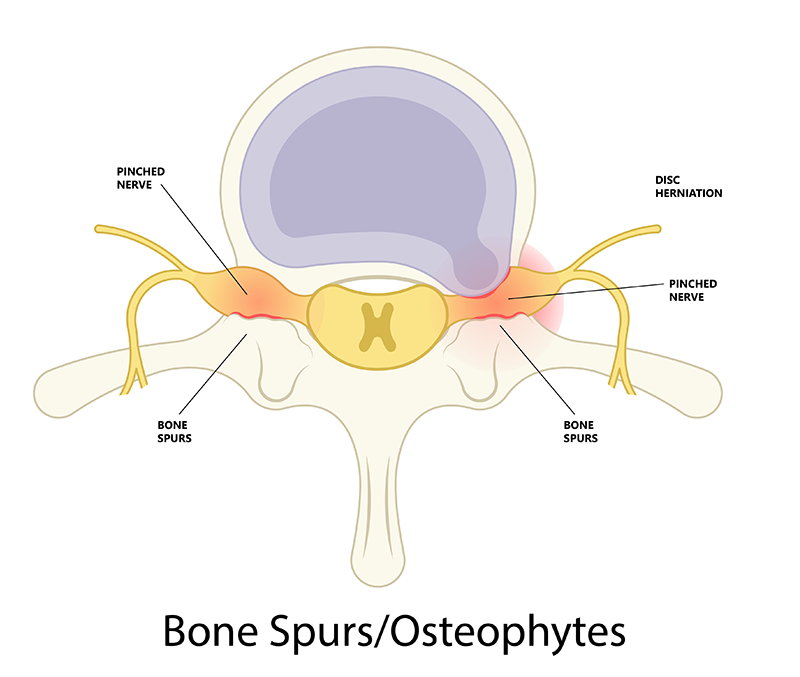
Bone spurs, also known as osteophytes, are bony projections that form along the edges of bones. In the spine, they typically develop on the vertebrae or around the joints as a response to degenerative changes. They are the body’s attempt to stabilize a joint that has lost cartilage or disc height, but these “repairs” can protrude and crowd nearby nerves. Bone spurs often accompany spondylosis and are a component of spinal stenosis when they encroach on the spinal canal or the openings where nerves exit.
Types of Bone Spurs
Cervical (Neck) Bone Spurs: Osteophytes in the neck that can press on nerve roots or the spinal cord, causing neck pain and symptoms radiating into the shoulders and arms.
Thoracic (Mid Back) Bone Spurs: Less common, but can cause mid-back pain and stiffness.
Lumbar (Low Back) Bone Spurs: The most frequent type, often contributing to low back pain, sciatica and spinal stenosis.
Causes
Bone spurs generally develop as the body’s response to:
– Joint damage from osteoarthritis
– Aging-related cartilage degeneration
– Chronic inflammation
– Trauma or injury
– Genetic predisposition
– Repetitive stress on bones and joints
Symptoms
Many people have bone spurs without symptoms. When symptoms occur, they may include:
– Dull or sharp pain near the affected joint
– Swelling
– Stiffness or reduced range of motion
– Numbness or tingling if nerves are compressed
– A noticeable hard lump under the skin
Diagnosis
Diagnosis typically involves:
– Physical examination of joint tenderness, movement and swelling
– X-rays, the most common imaging to visualize bone spurs
– MRI or CT scans for detailed images of soft tissue and nerve compression
– Nerve conduction studies if nerve involvement is suspected
Managing Symptoms
Initial management focuses on calming the irritated joint or nerve: rest from aggravating activities, physical therapy, over-the-counter anti-inflammatory medication, and heat or ice. Many people manage bone spur symptoms this way for years. If pain, numbness or weakness persists or worsens, it is important to talk to your doctor so the source of the compression can be identified and treated.
Prevention
Bone spurs are part of the spine’s natural aging process, but their progression can be slowed. Maintaining good posture, staying active, strengthening the core and back muscles, keeping a healthy weight, avoiding tobacco and using proper lifting technique all reduce the stress on the joints and discs that drives spur formation.
Conservative Treatment Options
Most bone spurs can be managed without surgery. Non-surgical options include:
– Nonsteroidal anti-inflammatory drugs (NSAIDs) to relieve pain and inflammation
– Physical therapy to improve strength, flexibility and joint function
– Corticosteroid injections to reduce localized inflammation
– Orthotics or bracing to offload stress from the affected joint
– Activity modification to avoid movements that worsen symptoms
Surgical Treatment Options
If conservative measures fail or nerve compression is severe, surgery may be recommended to remove the bone spur and decompress the nerve. At NextGen Spine Center, this is performed using minimally invasive techniques: through a small opening, the osteophyte and any thickened tissue pressing on the nerve are removed while the surrounding muscle, ligaments and the natural motion of the spine are preserved. No fusion and no implanted hardware are required, and patients return home the same day.
Frequently Asked Questions
Or contact us at any time
No. Bone spurs are benign bony growths and are not related to cancer.
They do not disappear naturally, but the symptoms they cause often improve with conservative treatment.
If you experience persistent pain, numbness, tingling or weakness in an arm or leg, consult a spine specialist so the cause can be identified.
No. Most improve with non-surgical treatment. Surgery is considered when a spur is compressing a nerve and symptoms persist or worsen despite conservative care.
Our team offers expert diagnosis and comprehensive treatment plans customized to help treat you. These include truly minimally invasive procedures, designed to help our patients return to a pain-free life without fusion or implanted hardware.